


Webinars
This page contains exclusive content for the member of the following sections: TTS, CTS, IPITA, ISODP, IXA, ITA, TID, IHCTAS, IPTA, SPLIT, ISUTX. Log in to view.
Reproductive Bioengineering
0.0 - Reproductive Bioengineering: From Fertility Therapies to Digital Pregnancy
Presenter: Christian Kramme, Kristin Myers, , , Unites States
Authors: Christian Kramme, Kristin Myers, David Lott, Rohan Paul, Alice Tomei

Moderator
Bio
Miami Engineering Career Development
Associate Professor,
Department of Biomedical Engineering
University of Miami
Dr. Tomei is the Miami Engineering Career Development Associate Professor in Biomedical Engineering at the University of Miami. She obtained her M.S. in Materials Engineering from the Politecnico of Milan (Italy) in 2004, and her Ph.D. in Bioengineering and Biotechnology from the Ecole Polytechnique Fédérale de Lausanne (EPFL, Switzerland) in 2008. Dr. Tomei currently directs the Islet Immunoengineering Lab at the Diabetes Research Institute (DRI) where she is applying her unique background in bioengineering and immunology to develop novel immunoengineering platforms to prevent rejection after islet transplantation and to promote antigen-specific tolerance for a cure of type-1 diabetes.
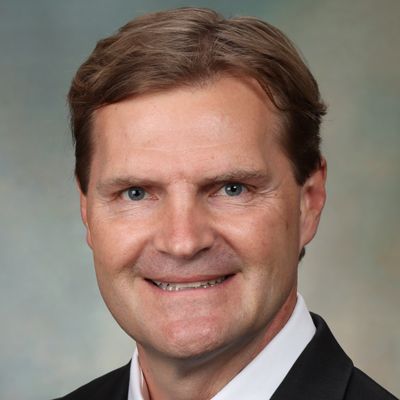
Moderator
Bio
Professor of Otolaryngology, Mayo Clinic College of Medicine and Science
Chair, Department of Otolaryngology – Head and Neck Surgery/Audiology
Mayo Clinic, Phoenix, USA
Dr. David G. Lott holds the academic rank of Professor of Otolaryngology at Mayo Clinic College of Medicine and Science. He serves as the Chair of the Department of Otolaryngology – Head and Neck Surgery/Audiology at Mayo Clinic Arizona. His practice includes voice and swallowing restoration, laryngeal cancer, and laryngotracheal reconstruction.
Dr. Lott received his M.D. degree at the University of Iowa Carver College of Medicine and completed a residency in Otolaryngology/Head and Neck Surgery at the Cleveland Clinic Head and Neck Institute. He received further fellowship training in Laryngeal Surgery and Professional Voice at Harvard Medical School/Massachusetts General Hospital.
Dr. Lott served as the Associate Director of the Mayo Clinic Center for Regenerative Biotherapeutics for 8 years. He is faculty for both the Clinical & Translational Science and Regenerative Sciences tracks within the Mayo Clinic Graduate School of Biomedical Sciences.
In addition, he is the Director of the Head and Neck Regenerative Medicine and Transplantation Program at Mayo Clinic. The primary goal of the program is to establish safe and effective clinical translation of regenerative medicine and transplantation technologies. The team is pioneering tissue-engineered technologies to create patient-specific 3D bioprinted implants for the larynx and trachea. Additionally, the efforts of this program have resulted in the world’s first total larynx transplant in the setting of active cancer.
Throughout his career Dr. Lott has received many awards and honors, including being named in the Top Voice Doctors in America by Billboard Magazine. He received the Mayo Clinic Transform the Practice Award and has been honored with the Mayo Clinic Teacher of the Year Award. Most notably, he is a Mayo Clinic Distinguished Clinician, the highest honor given for clinical excellence.
Dr. Lott is involved with both national and international organizations and is an active member of the American Academy of Otolaryngology/Head and Neck Surgery, Triological Society, American Bronchoesophageal Society, American Laryngological Society, and the International Bronchoesophagological Society.

Moderator
Bio
Associate Professor of Medicine, Washington University
St Louis, MO, United States
Rohan Paul, MD, is a transplant nephrologist and Associate Professor of Medicine at Washington University School of Medicine. His research applies single-cell and spatial transcriptomics to delayed graft function, kidney allograft injury, tubular stress responses, immune–epithelial interactions, and kidney–lung crosstalk. His work spans human transplantation and experimental kidney injury and has been presented at ASN Kidney Week and the American Transplant Congress. He also leads patient-safety and quality-improvement initiatives supported by the American Association of Kidney Patients.

Speaker
Bio
Chief Scientific Officer,
Gameto Inc.
New York, United States
Christian Kramme is the Chief Scientific Officer of Gameto Inc., a biotechnology company developing fertility and endocrine therapeutics for women’s health. At Gameto, Christian invented and further developed the in vitro maturation (IVM) product Fertilo, which is currently in Phase III clinical trials in the United States. Beyond fertility, Christian and his team at Gameto likewise have invented a cell-based hormone replacement therapy for menopause and new vaginal ring deliveries for women’s health therapeutics which are in preclinical development.

Speaker
Bio
Professor of Mechanical Engineering
Columbia University, New York, United States
Kristin M. Myers, Ph.D., is a Professor of Mechanical Engineering at Columbia University, where she runs a soft tissue biomechanics laboratory at Columbia University Irving Medical Center in collaboration with the Department of Obstetrics and Gynecology. An international leader in Women's Health Engineering, she uses experimental, theoretical, and computational biomechanics to study pregnancy and postpartum physiology, aiming to uncover the structural antecedents of preterm birth and develop new diagnostic and therapeutic tools. Her lab holds the largest published library of biomechanical data on human pregnancy and is among only a few worldwide building computational digital twins of pregnancy to reveal how the cervix remodels from a protective barrier into a passageway for delivery. Dr. Myers earned her doctorate and master's in Mechanical Engineering from MIT and her bachelor's from the University of Michigan. Her honors include the ASME Y.C. Fung Young Investigators Award (2017), the Presidential Early Career Award (PECASE) (2019), and induction into the AIMBE College of Fellows (2025).
Important Disclaimer
By viewing the material on this site you understand and accept that:
- The opinions and statements expressed on this site reflect the views of the author or authors and do not necessarily reflect those of The Transplantation Society and/or its Sections.
- The hosting of material on The Transplantation Society site does not signify endorsement of this material by The Transplantation Society and/or its Sections.
- The material is solely for educational purposes for qualified health care professionals.
- The Transplantation Society and/or its Sections are not liable for any decision made or action taken based on the information contained in the material on this site.
- The information cannot be used as a substitute for professional care.
- The information does not represent a standard of care.
- No physician-patient relationship is being established.
Contact
Address
Cell Transplant and Regenerative Medicine Society
c/o The Transplantation Society
740 Notre-Dame Ouest
Suite 1245
Montréal, QC, H3C 3X6
Canada